Witch-Hunting Magistrates
The infamous Matthew Hopkins and his colleague John Stearne were not the only witch-hunters in Essex in 1645. In fact, Hopkins and Stearne were comparatively low-ranking members of a group of powerful men determined to free the region from witchcraft. The most senior of these men were two magistrates, also known as Justices of the Peace: Sir Harbottle Grimston, 1st Baronet and Sir Thomas Bowes.
Sir Harbottle Grimston was elected sheriff of Essex and MP for Harwich in 1614 and represented his county in Parliament in the 1620s. He was extremely wealthy and held manors in Mistley, Ramsey, Kirby, Lawford, and the Tendring, though his primary residence was at Bradfield Hall near Manningtree. He was a Puritan who had railed in Parliament against the “pestilential filth that hath infested the state and government of this commonwealth”. By 1645, Grimston was an elderly man who remained active in his county as a magistrate and landowner.
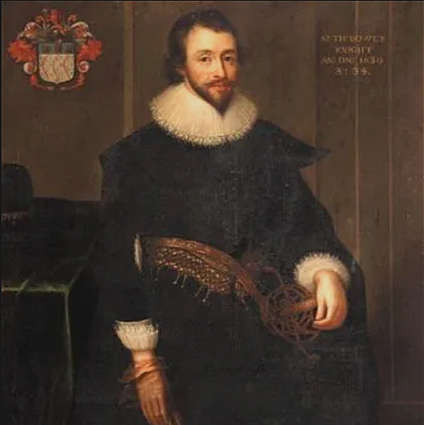
Sir Thomas Bowes (pictured) was younger than Grimston at around forty years old in 1645. Bowes was also wealthy and had connections to other rich and respectable families in the county. He was a Presybterian and lived at Great Bromley Hall near Manningtree.
Both Grimston and Bowes had investigated witches before the 1645 outbreak. Grimston had sent four women to Colchester Castle’s gaol in 1638 and Bowes had arranged for Anne West of Lawford to be prosecuted in 1642.
In March 1645, Elizabeth Clarke of Manningtree was suspected of bewitching her neighbours. Grimston and Bowes gave John Stearne a warrant to investigate anyone that Elizabeth accused of witchcraft and listened the next day as Stearne, Matthew Hopkins, and other witnesses described how they had seen Elizabeth summon demonic imps. The magistrates might have taken a more critical approach and dismissed their claims: instead, the two men had Elizabeth taken to Colchester gaol and authorized further arrests, signing off on what would become England’s largest witch-hunt.
Grimston and Bowes took the lead on the Essex investigations. Most accusations originated on or near Grimston’s estates. One or both men personally rode out to Thorpe, Alresford, Wivenhoe, Great Clacton, Great Holland, Kirby, Walton, and Ramsey to question suspects or hear evidence. Bowes also in his home at Great Bromley Hall heard evidence of witchcraft in St Osyth. Yet the burden was too great for the two men alone. It is probable they deployed Hopkins and Stearne to investigate on their behalf, including sending Hopkins to Colchester Castle to interrogate the confessed witch Rebecca West, who subsequently turned Crown witness and provided crucial ‘evidence’ for the prosecution at the Chelmsford Assizes in July 1645.
Grimston and Bowes were present for the Chelmsford Assizes. Unusually for a magistrate, Bowes even testified against one suspect: Anne West, whom he had previously prosecuted in 1642. The evidence he gave before the court was not even his own, but that of a mere glove-maker who claimed to have witnessed Anne’s imps. That he would present such weak testimony in such an uncommon way would suggest Bowes was determined that Anne would not escape this time.
Nineteen women, including Anne West, were found guilty at the Chelmsford Assizes and executed.
Grimston and Bowes returned home. Their intense, but brief fascination with witches was over, likely because they believed they had successfully rid their jurisdiction of witchcraft. It is unlikely the Essex stage of the East Anglian witch trials would have had much 'success’ if not for the magistrates actively seeking out or approving of witch-hunting.
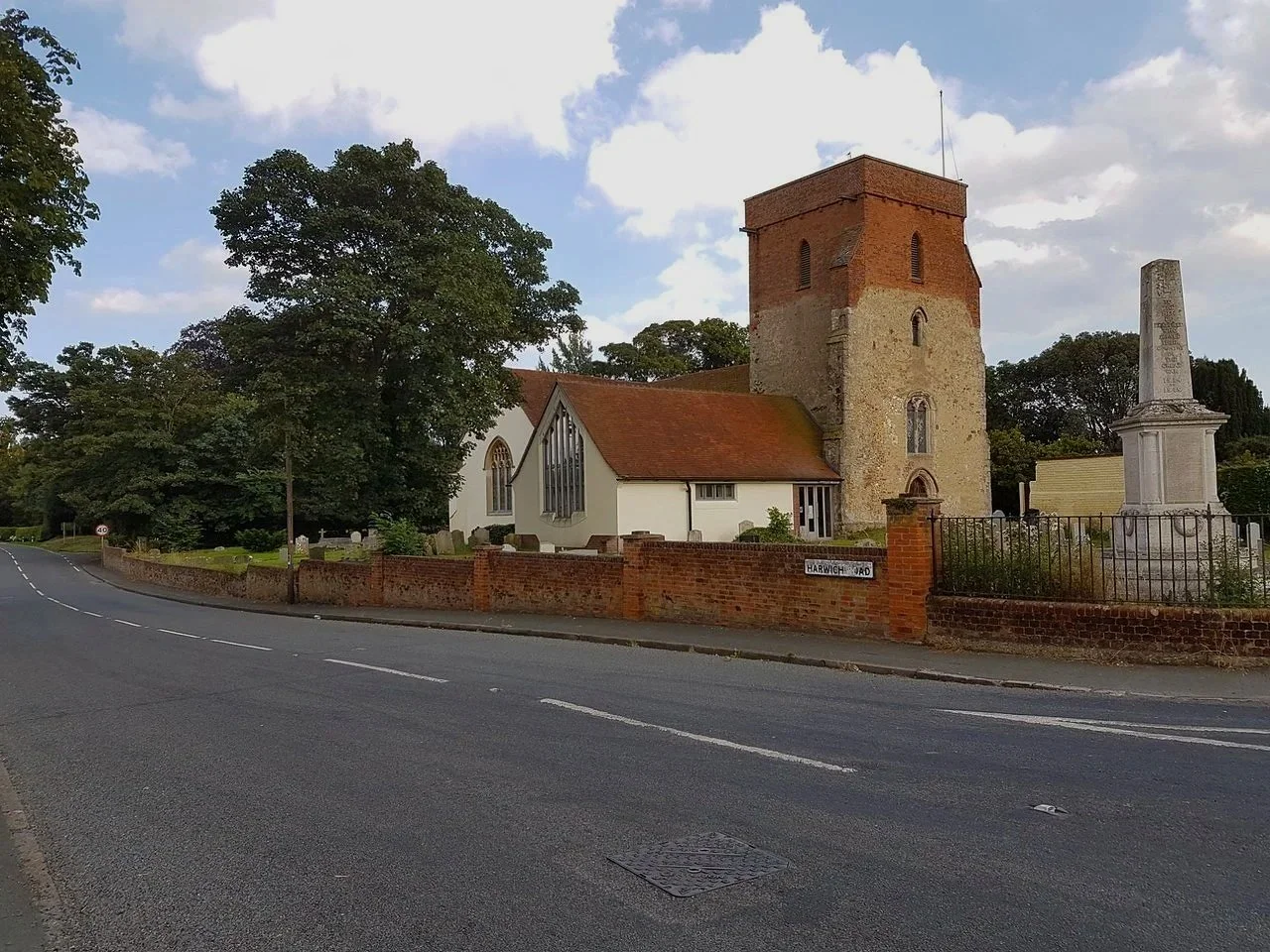
Grimston died in 1648. He is buried at St Lawrence’s Church, Bradfield (pictured).
Bowes continued to fulfil his civic duty as a magistrate for years to come.
But the witch-hunt was not over for Hopkins and Stearne. They would continue their pursuit of witches beyond the magistrates’ jurisdiction, across the River Stour to Suffolk.
Further reading.
A true and exact relation of the severall informations, examinations, and confessions of the late witches, arraigned and executed in the county of essex. (London, 1645)
Barell, Helen, “The Travails of Matchmaking: William Cardinall and Sir Thomas Bowes”
John Burke, Bernard Burke, A Genealogical and Heraldic History of the Extinct and Dormant Baronetcies (1838)
C.L’Estrange Ewen, Witch Hunting and Witch Trials (London, 1929)
Malcolm Gaskill, Witchfinders: A Seventeenth-Century English Tragedy (Harvard University Press, 2005)
“GRIMSTON, Sir Harbottle, 1st Bt. (c.1578-1648), of Bradfield Hall, Essex”, The History of Parliament: the House of Commons 1604-1629, (2010)