Visit Colchester
Colchester has been inhabited for over 2,000 years. Originally an Iron Age settlement, it became the Roman capital of Britannia in 43 AD. It was destroyed by Boudicca, rebuilt, occupied by Vikings, and became a major settlement under the Normans and through the medieval and Tudor periods.
In the fifteenth and sixteenth-centuries, it was the town where Essex witches were imprisoned as they awaited trial. Suspects were held in the gaol at Colchester Castle in horrible conditions. The witchfinder Matthew Hopkins is known to have visited the castle to interrogate the imprisoned witch Rebecca West. The story of that interrogation can be found here. His fellow witchfinder, John Stearne, also hunted witches at Colchester, pursuing a local woman — with disastrous results for Stearne.
Alice Stansby was a poor widow accused of witchcraft and investigated by Stearne in the summer of 1645. She was imprisoned at Colchester Castle and probably convicted at the borough sessions, but was exonerated, likely in part due to the efforts of influential Colchester townsmen who had come to her defence. The proceedings against Stansby resulted in an enormous bill to be paid by Colchester’s ratepayers, sparking outrage. Stearne was summoned to court over his handling of the controversial and costly case, but failed to appear. The court then outlawed Stearne from Colchester. The historian Malcolm Gaskill has speculated that this incident led Stearne and Hopkins to leave Essex for Suffolk, where they had family ties and could hope for better reception after the Colchester controversy, causing the witch-hunt to spread.
The only major still-standing site associated with the East Anglian witch trials is Colchester Castle. However, there are many buildings still standing that would have been there in 1645, and so visiting them allows us to see a glimpse of the Colchester that the witchfinders and accused witches would have known.
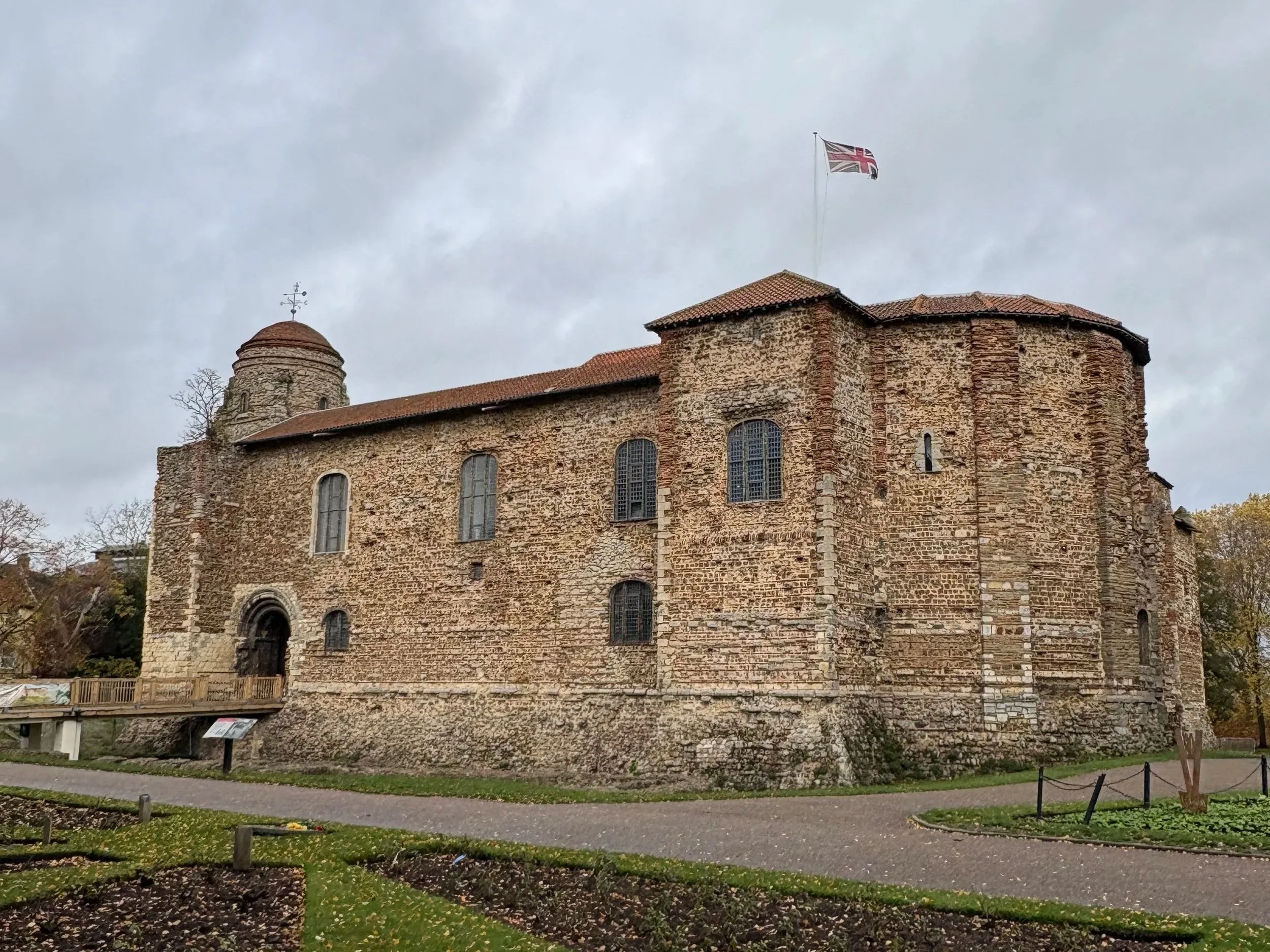
Colchester Castle
The thirty-six women who were tried for witchcraft at the Chelmsford Assizes in July 1645 were held in the castle gaol beforehand.
See here for more information on the castle and the witch trials.
Churches
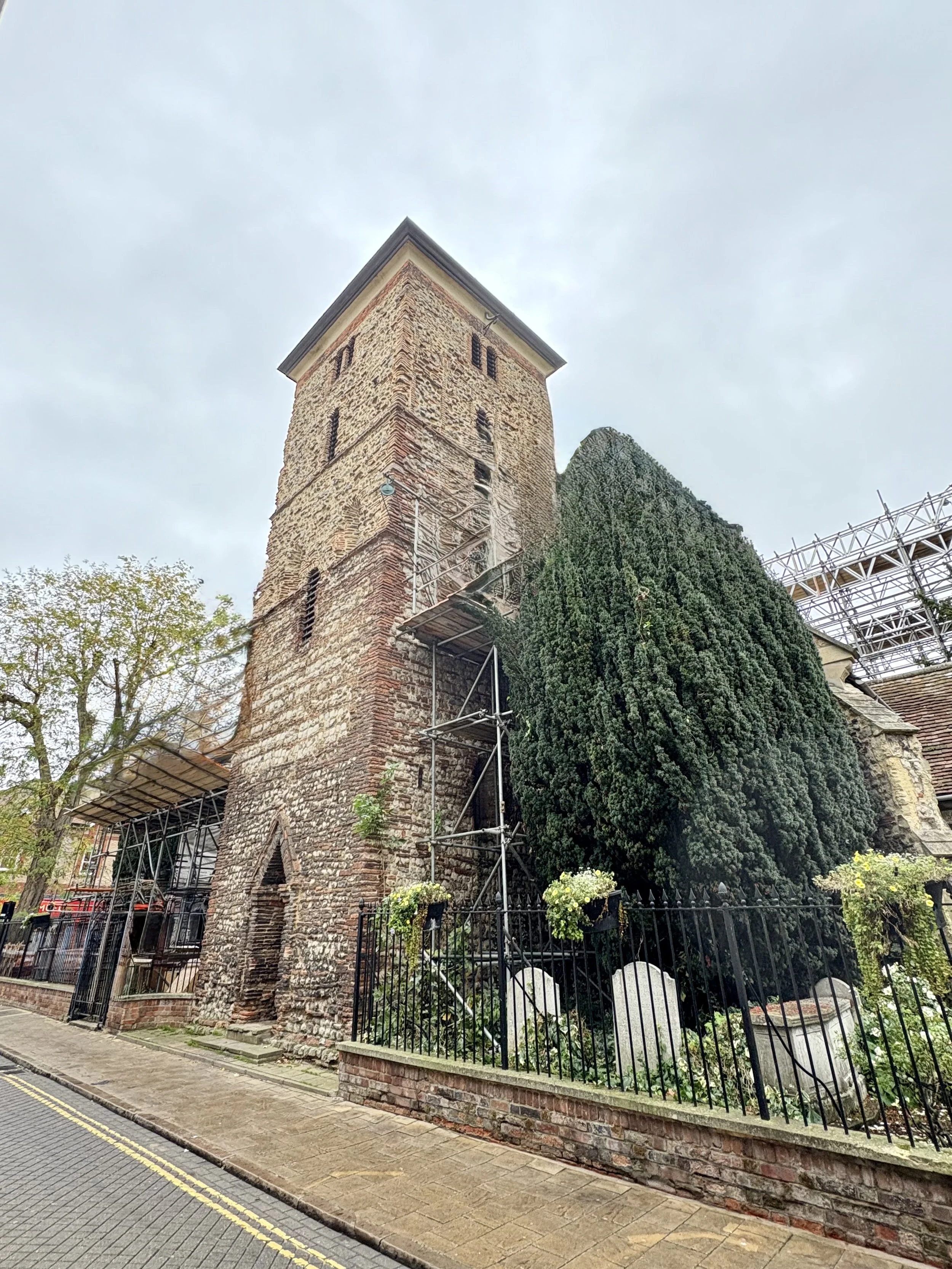
Pictured: Holy Trinity Church
The accused witch Alice Stansby was from St Giles parish. Two local women who body-searched her and testified she had Devil’s marks were from the Holy Trinity and St Botolph’s parishes. The three sites still stand in some form to this day.
St Giles was consecrated in 1211 and used for centuries as a place of worship, but is today a Masonic centre.
Colchester’s oldest still standing building, Holy Trinity Church as it appears today is a combination of Roman, Saxon, medieval, and Victorian architecture. There is a memorial within to the Elizabethan scientist and physician William Gilberd. The church was under renovation and not open to the public at the time of publishing.
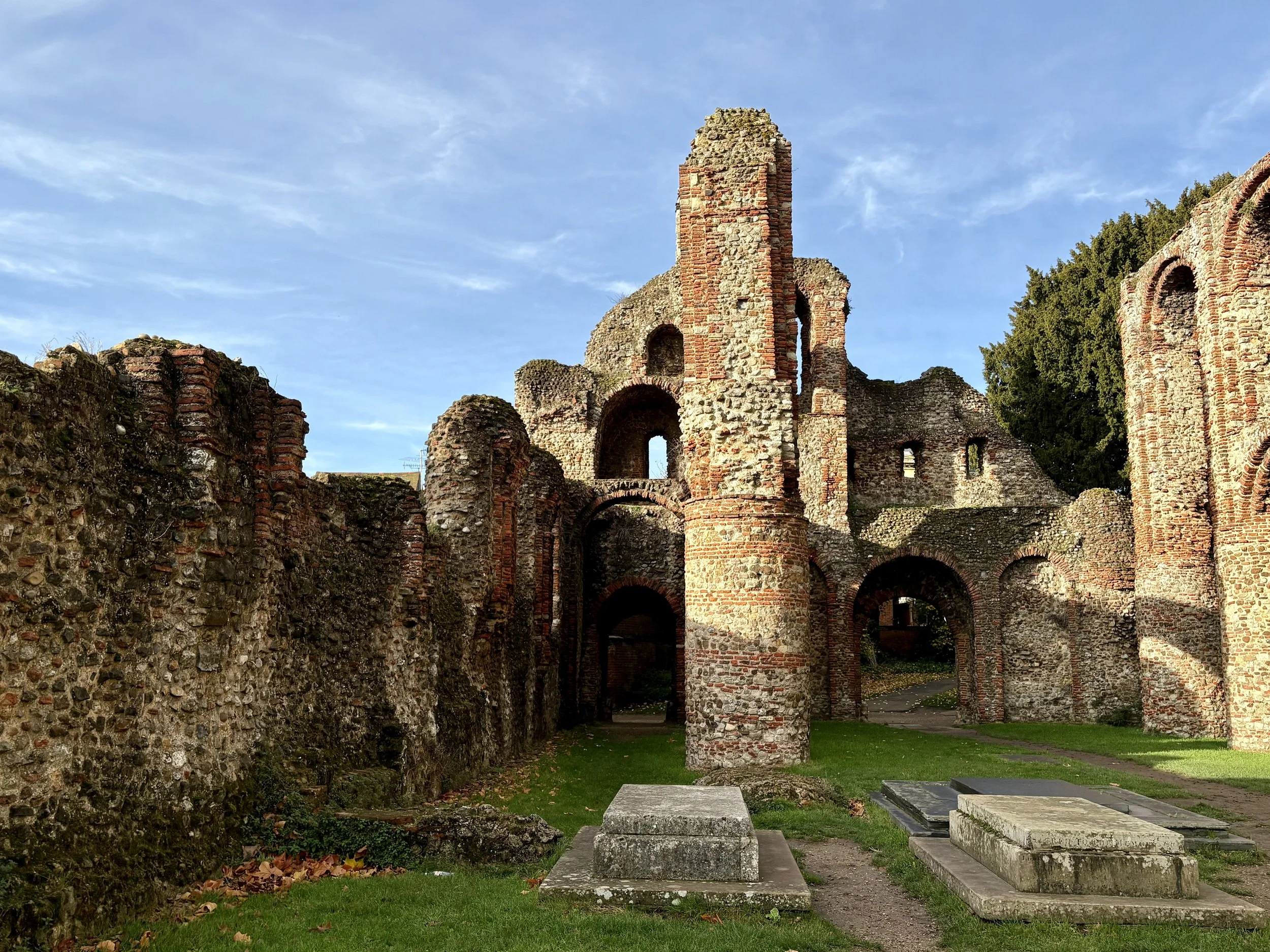
St Botolph’s Priory was founded circa 1100 and was one of the first Augustinian religious houses. It was dissolved in 1536 but remained in operation as a parish church.
The priory was reduced to ruins during the siege of Colchester in 1648 as part of the Second English Civil War.
It was used as a burial ground in the eighteenth and nineteenth centuries.
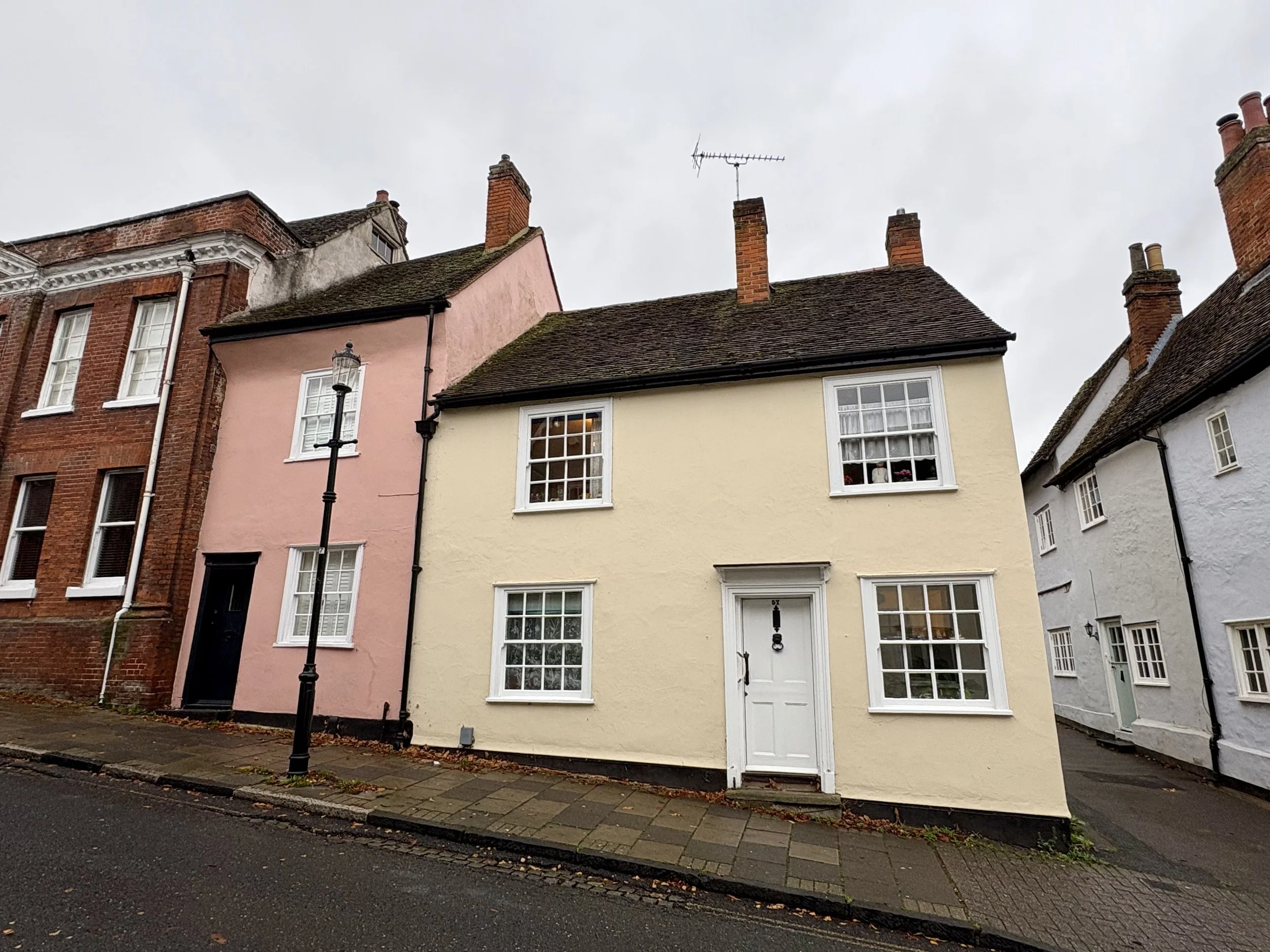
The Dutch Quarter
This residential area was the home of Flemish refugees fleeing religious persecution in the sixteenth-century. The Dutch residents were renowned for their skill with cloth-production.
The author Richard Deacon wrote a fanciful “biography” of Matthew Hopkins that included a number of unsubstantiated claims about the witchfinder, including that he was descended from Dutch Huguenot immigrants. Like most of the claims in Deacon’s book, there is no evidence for this, but it is still a commonly repeated myth.
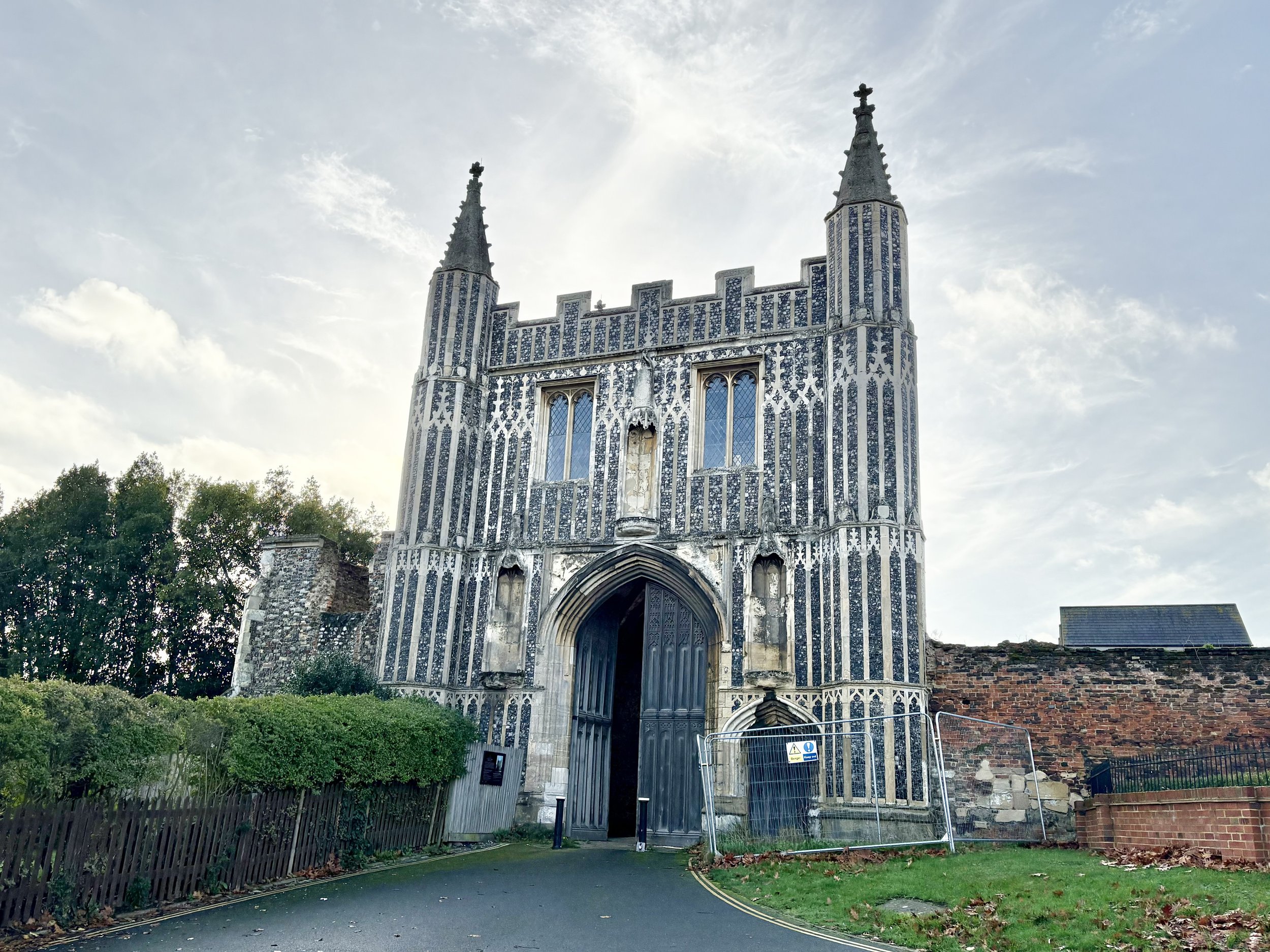
St. John’s Abbey Gate
This gatehouse is all that remains of the Benedictine St. John’s Abbey. The abbey was founded in 1095 and the gatehouse was built around 1400.
St. John’s initially refused to surrender during the Dissolution of the Monasteries, but submitted after the abbot’s execution. It became a family estate and was the birthplace of the writer Margaret Cavendish in 1623.
The site was heavily damaged in the siege of Colchester in 1648 with the gatehouse stormed by Parliamentarian forces.
The main abbey fell into decay and was demolished, leaving only the gatehouse.
Colchester is an immensely historic city and a stroll through town reveals 2,000 years of architecture from reused Roman brickwork to Tudor establishments to Victorian engineering. Other highlights include the obelisk marking the 1648 execution site of Royalist commanders in Castle Park, the Hollytrees Museum, and Colchester Town Hall.
Further reading.
Malcolm Gaskill, Witchfinders: A Seventeenth-Century English Tragedy.
English Heritage — St. Botolph’s and St. John’s.