Colchester Castle: The Witches’ Prison
April 1645.
Colchester Castle was the first of the great keeps and the largest built by the Normans in Europe. But by 1645, it had fallen into such a state of disrepair that it was only fit for one purpose: a prison.
Elizabeth Clarke, Anne and Rebecca West, and the other women from Manningtree or the adjacent villages were imprisoned in the castle in March or April 1645. They were soon joined by other Essex women until there number reached thirty-six held on suspicion of witchcraft.
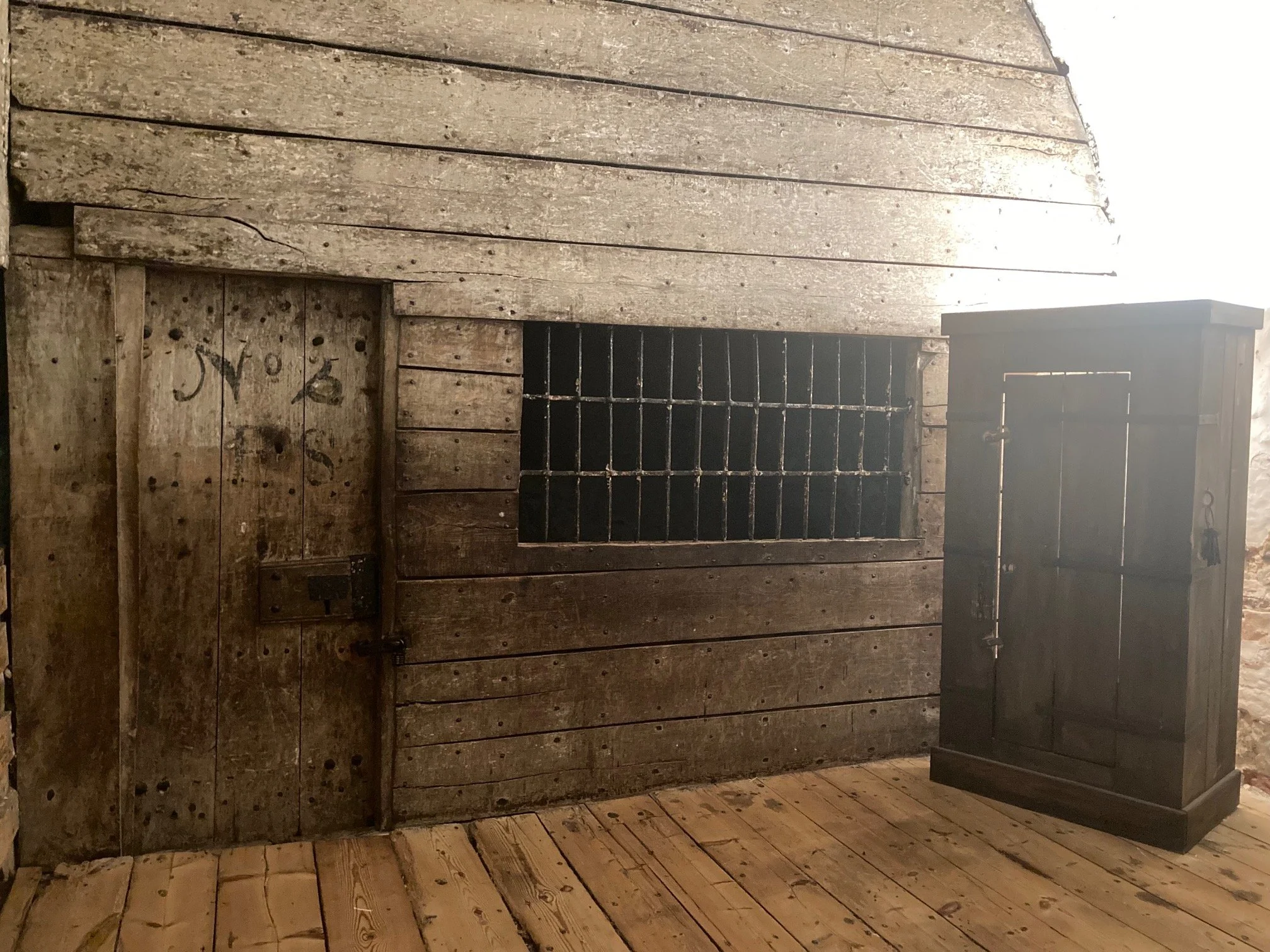
Recreation of a seventeenth-century cell at the Colchester Castle museum.
Conditions in the gaol were dire.
Part of the roof had collapsed a decade prior and exposed prisoners to the elements. Male and female prisoners were separated into two cells and kept shackled. They slept on straw or bare stone. Food was poor and basic cleanliness impossible. Many prisoners, including some of the women accused as witches, died of exposure, malnutrition, or disease.
In mid-April 1645, Matthew Hopkins visited Colchester Castle. At approximately twenty-five years old, he was the most junior of a team of men who had taken it upon themselves to hunt down witches in Essex. Sir Harbottle Grimston, 1st Baronet, in his seventies, and Sir Thomas Bowes, estimated in his fourties, were magistrates with a duty to investigate witchcraft and other crimes. John Stearne was a landowner in his mid-thirties who apparently involved himself in the investigation out of curiosity or civic duty. Hopkins had become involved initially through his step-sister who believed herself cursed by Elizabeth Clarke, but he soon showed an interest in pursuing witches throughout Essex. The unpleasant task of going to Colchester Castle may have been assigned to him as the youngest witchfinder or he may have eagerly volunteered for the task to prove his capability.
Hopkins’ target was Rebecca West.
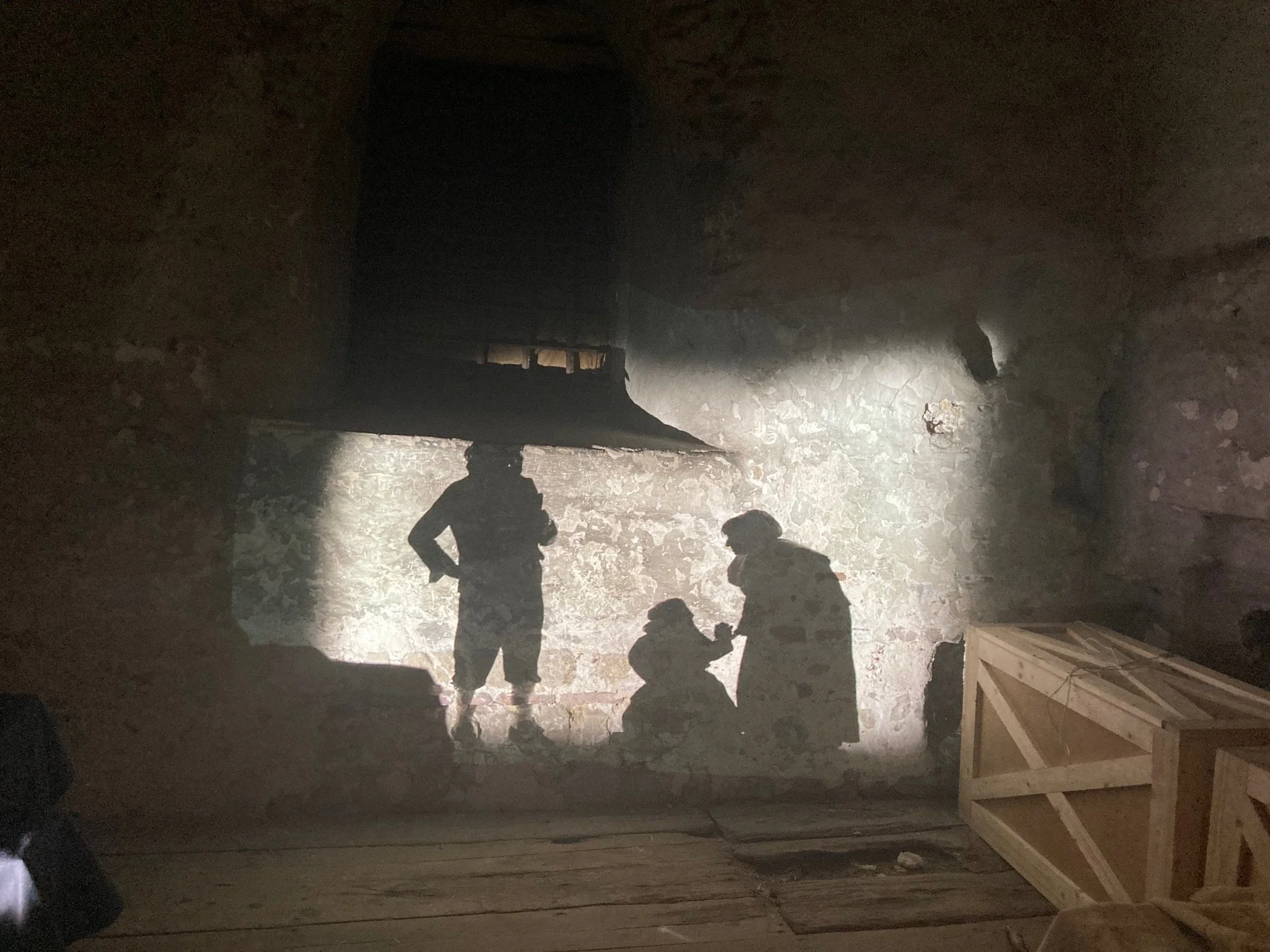
Display from Colchester Castle museum imagining the interrogation of Rebecca West (centre) by Hopkins (left) and a female searcher (right).
Rebecca had already confessed and accused her mother, Anne, of witchcraft —Hopkins saw her as a weak point by which he might unmask the Manningtree “coven”. Hopkins isolated Rebecca from the other women and coerced a more elaborate confession from her. Rebecca now accused the other imprisoned Manningtree women of being witches and, shockingly, claimed she was married to the Devil.
Rebecca West’s coerced confession was damning for the women she accused. All of the alleged Manningtree coven, including Anne West, were found guilty of witchcraft and executed, except Rebecca. She was freed due to her turning prosecution witness and her age — she was likely only in her early or mid-twenties. It is unknown what became of Rebecca West after the trials.
Today.
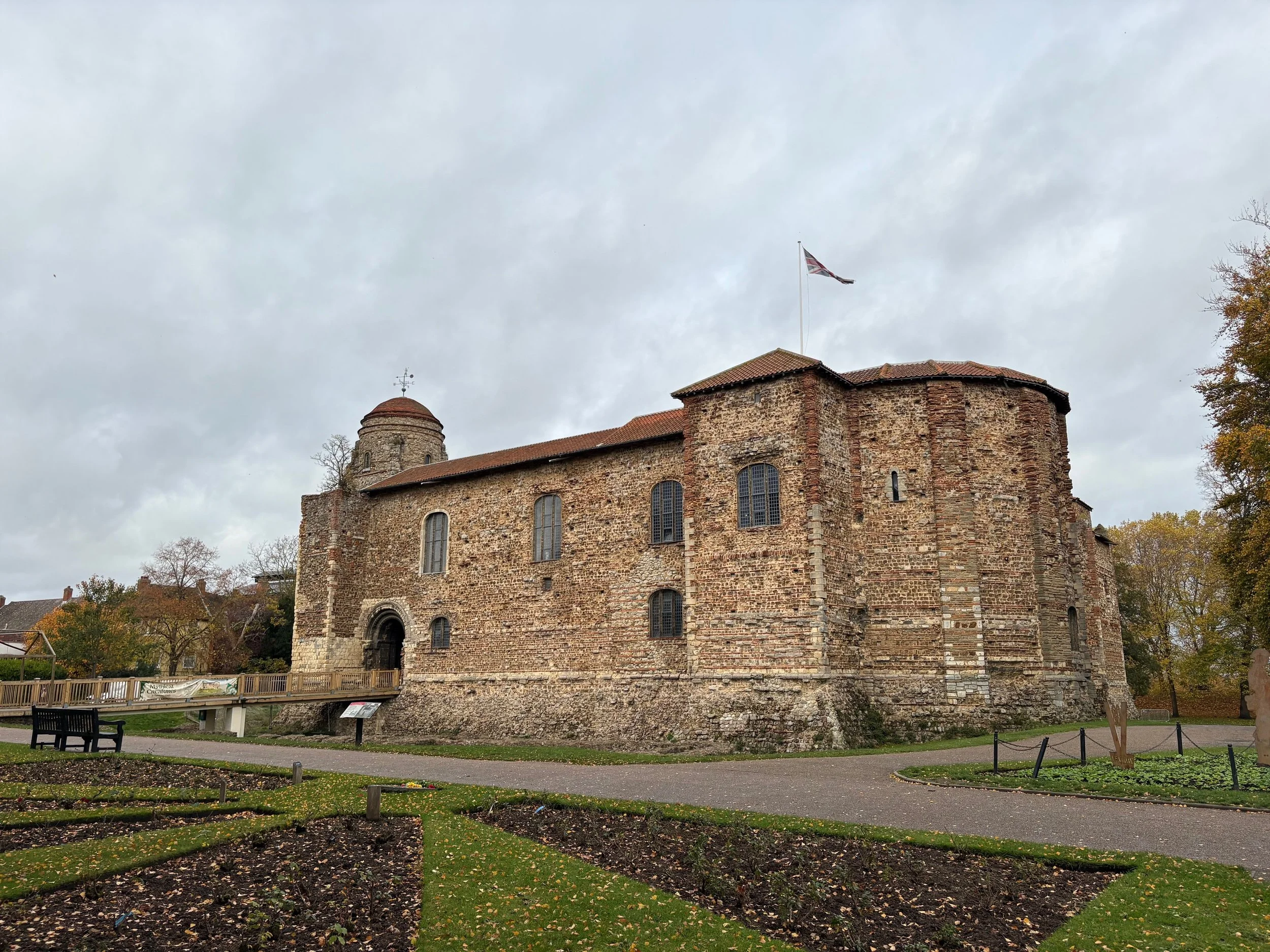
Colchester Castle’s original interior does not survive and has instead been converted into a modern museum dedicated to the town’s history.
The collection includes Celtic coin hoards, Roman artifacts, medieval paintings, and civil war armour.
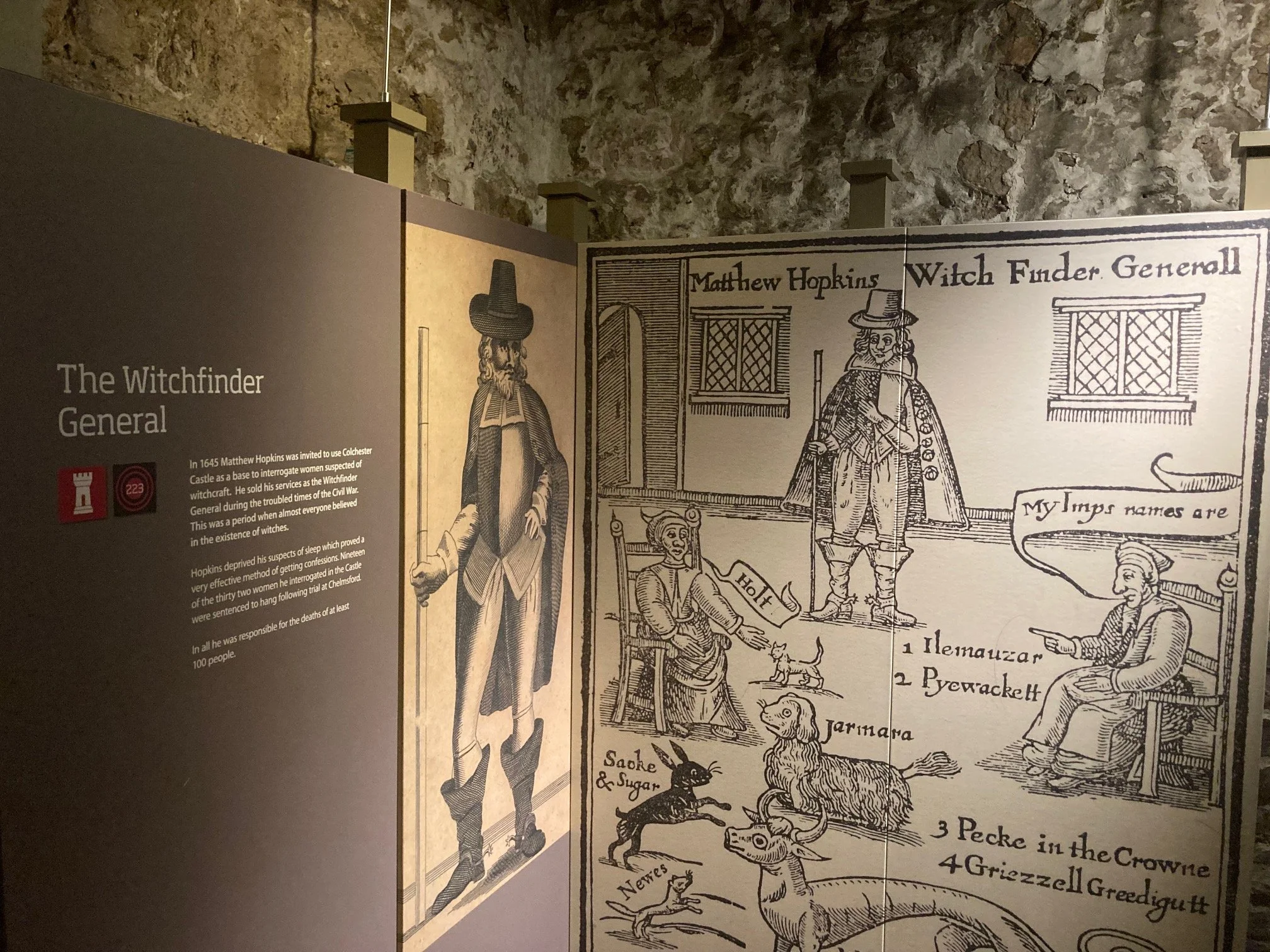
The museum includes a section on the East Anglian witch trials (1645-47). There are information displays, a recreation of the cell the women would have been held in, and a creative dramatization of Rebecca West’s interrogation using shadow figures.
Some of the museum’s information is slightly misleading. The display text pictured right implies Hopkins was personally responsible for the estimated 100 executions, when he was one of several witchfinders, albeit the most well-known today. Narration also states Rebecca West was a teenager, a common assumption in histories of the trials, but my own research would suggest she was slightly older in her early to mid-twenties.
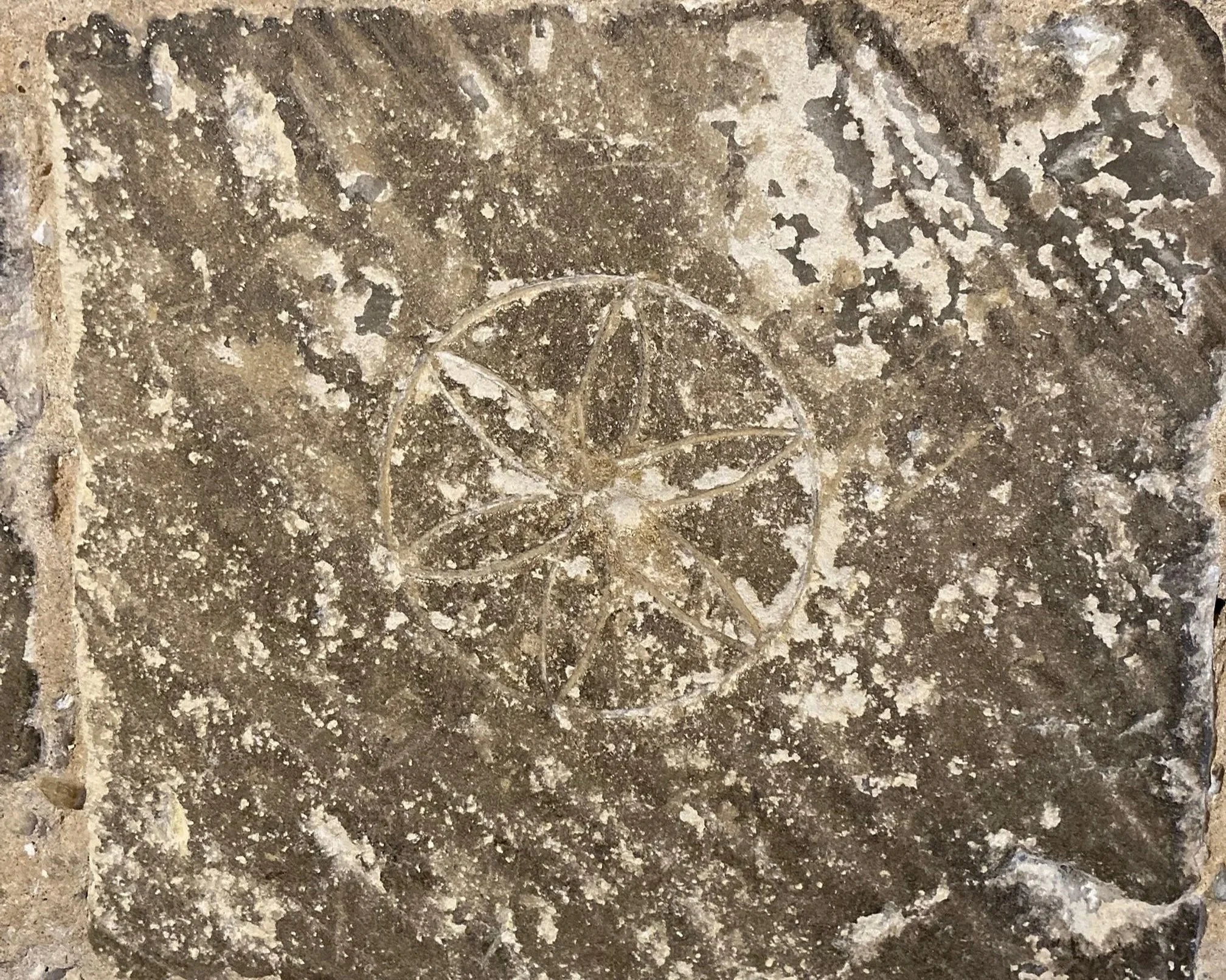
If you take the Roman Vaults and Castle Roof tour, ask to be shown the “witch’s mark” on the staircase.
This witch’s mark is different from the one said to be found on witches’ bodies. This was a protective symbol carved into buildings to ward off evil.
It’s exact date of creation is unknown, but my tour guide suggested it may have been carved in 1645 as a defence against any evil the thirty-six imprisoned witches might have brought with them.
This witch’s mark is not on general public display and can only be seen on the Roman Vaults and Castle Rooftop tour.
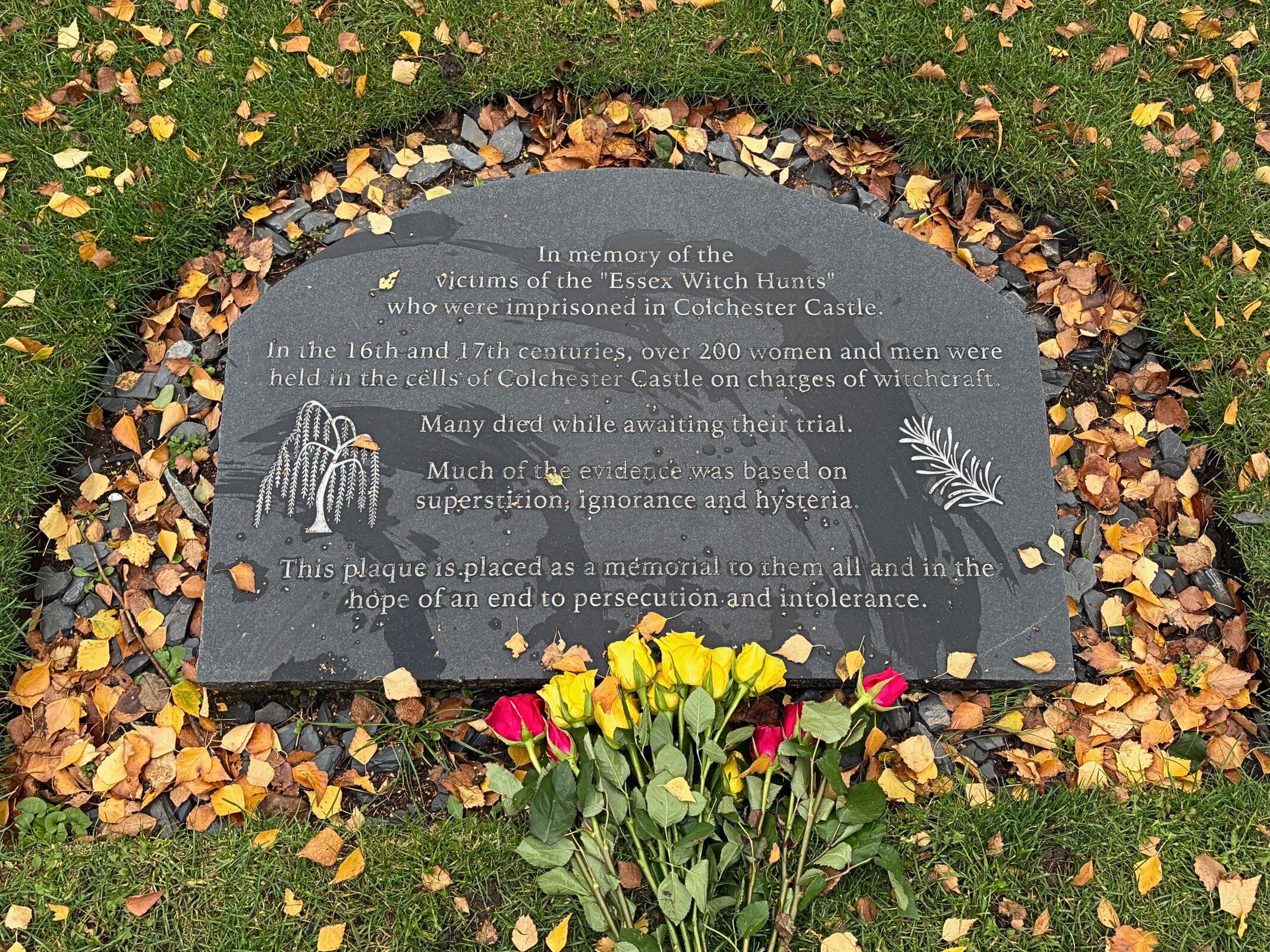
A plaque was unveiled in 2018 remembering the women and men who had been accused of witchcraft in Essex in the sixteenth and seventeenth centuries.
A bouquet of flowers had been left at the memorial.
The plaque is located in front of the castle.
Further reading.
A true and exact relation of the severall informations, examinations, and confessions of the late witches, arraigned and executed in the county of essex. ( London, 1645)
Malcolm Gaskill, Witchfinders: A Seventeenth-Century English Tragedy
Frances Timbers, “Witches’ Sect or Prayer Meeting?: Matthew Hopkins Revisited”, Women’s History Review (2008)