The Witch-Priest of Brandeston
Summer 1645.
The Manningtree witches accused in March and April 1645 were easy targets. Disability, poor reputation, and poverty could readily be demonized into suspicions of witchcraft. It is no coincidence that the thirty-six accused Essex witches were all women. But once the witchfinders Matthew Hopkins and John Stearne crossed the Stour into Suffolk, something changed. They began investigating men as witches, and not just any man — an ordained minister.

John Lowes had been the vicar of All Saints’ Church in Brandeston (pictured) for nearly 50 years by 1645.
He was a controversial man, known to berate his congregation from the pulpit, to take his neighbours to court, and even to physically fight his parishioners in the church yard.
In one incident, he beat a man with a cudgel so that “the bloude did gushe and rune out of his nose and heade”.
In 1614 or 1615, he gave shelter at his house to a woman who had been accused of witchcraft. The woman, Ann Annson, was evidently lured out of the house by some trick, leading Lowes to exclaim that by God had he known the others intended to take her away, he would have “shutt bolits in their flesh” and that he would be revenged of them if Annson was harmed. Annson was convicted and executed at Bury St Edmunds. Suspicion of witchcraft then turned against Lowes as someone who had tried to protect a witch. There was some back and forth in the courts of suits and countersuits, but Lowes was ultimately not charged and released.
A faction in the Brandeston parish spent the next thirty years trying to have Lowes removed from his position. He was accused of barratry, or excessive litigiousness, in the 1630s. In 1641-42, there was a campaign to have Lowes and another minister ousted as “scandalous ministers”. “Scandalous” was an accusation laid against ministers for improper conduct or teaching, a particularly serious claim at a time of intense religious conflict in England.
Enter Matthew Hopkins, an eager young witchfinder with a rapidly growing reputation, fresh off the success of purging evil from Essex.
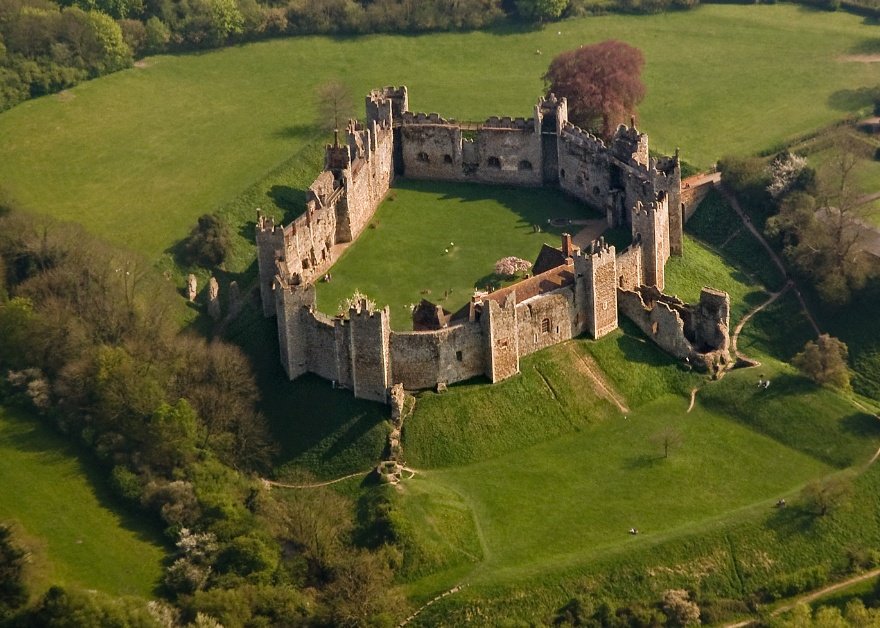
Lowes, in his seventies or eighties, was imprisoned at Framlingham (pictured).
He was deprived sleep and forcefully searched for devil’s marks on his body. He was made to walk about the room to prevent his falling asleep. It is unknown how long he was subjected to this. He was then swum, possibly in the castle’s moat.
Eventually, he confessed.
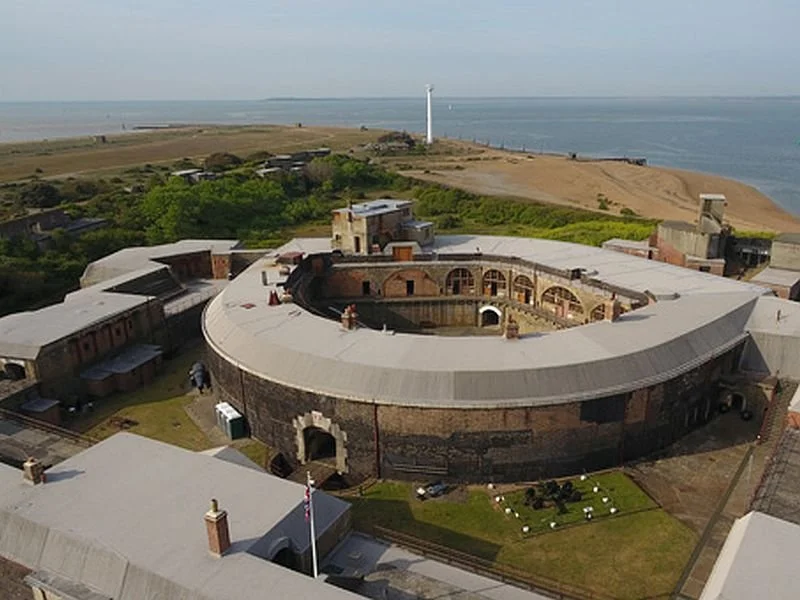
Lowes claimed he had sent imps to sink a ship passing by Landguard Fort (pictured) and that in fifteen minutes, he had made fourteen widows.
Lowes was viewed as a particularly powerful and evil witch, because he had deceived the world into believing he was a Godly minister and had jeopardized the salvation of his entire congregation for decades.
He was found guilty at the Bury St Edmunds assizes and hanged August 27, 1645, along with seventeen others. According to one account, Lowes performed his own funeral service at his execution.
Lowes and the witches were buried in unmarked graves. However, Lowes’ widow, Margaret, is known to have been buried at Brandeston in September 1648.
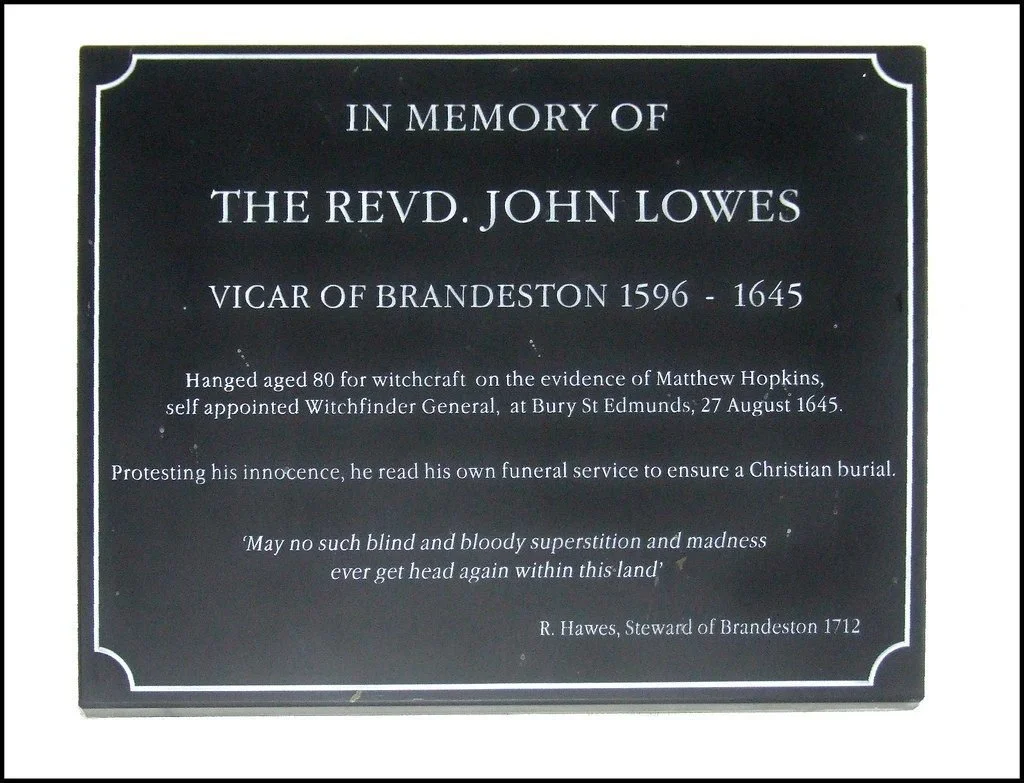
Today, Lowes’s hanging body is featured on the Brandeston town sign and there is a commemorative plaque to him at All Saints.
While Lowes’ persecution was doubtless an attempt by his parishioners to be rid of him, as they had been trying and failing to do so for thirty years, it is equally likely that his accusers genuinely believed him a witch. Witches were said to be violent, vengeful, sharp-tongued, tyranical when empowered, and to cause trouble with their neighbours — all traits that could be applied to Lowes in varying degrees.
His prosecution also demonstrates that Matthew Hopkins was growing more assured of his own power and the righteousness of his cause as he continued pursuing witches through Suffolk.
Further reading.
Ewen, C. L’Estrange, “The Trials of John Lowes, Clerk” (n.p., 1937)
Gaskill, Malcolm, Witchfinders: A Seventeenth-Century English Tragedy. Harvard University Press, 2005
Gasser, Erika, Vexed with Devils: Manhood and Witchcraft in Old and New England, (New York 2017)
Kent, E.J. "Tyrannical Beasts: Male Witchcraft in Early Modern English Culture", in Emotions in the History of Witchcraft, edited by Laura Kounine, and Michael Ostling, Palgrave Macmillan UK, 2017